Why Your Home Needs Whole-Home Surge Protection
Residential surge protection limits transient voltage before it travels farther through household wiring. Surges can originate from lightning activity, utility switching, or large appliances cycling. Repeated smaller events may also degrade sensitive components over time. Computers, televisions, appliances, HVAC boards, and connected controls can all contain vulnerable electronics.
Power surge protection at the panel covers more circuits than a point-of-use device. Plug-in products protect only the equipment connected to them. They do not cover hardwired systems or devices connected elsewhere. A layered approach can combine panel protection with listed point-of-use products for sensitive equipment.
Home surge protection cannot prevent every type of electrical damage. No surge protective device guarantees protection from a direct lightning strike. Proper grounding, bonding, panel condition, and device selection also affect performance. An electrician should evaluate these conditions before installation.
Our electrical services can include panel evaluation and compatible protection planning. Connected controls may also benefit because they rely on circuit boards and communication components. Hood Mechanical’s smart home upgrades support compatible controls and connected equipment.
Whole-home surge protection in Pawleys Island, SC, can extend panel-level coverage across the home’s branch circuits. Power surge protection also supports equipment that plug-in strips cannot reach.
Panel-level protection can help address surges associated with:
- Nearby lightning activity
- Utility switching and grid disturbances
- Large appliances cycling on and off
- Repeated lower-level voltage transients
- Electrical events affecting multiple household circuits
Whole-Home Surge Protector Installation
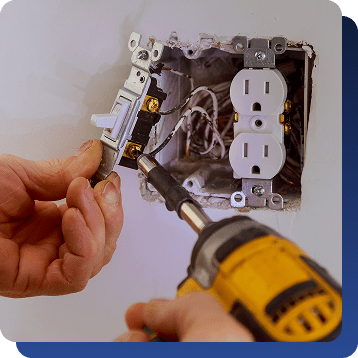
A whole-house surge protector installation begins with an assessment of the main electrical panel. The electrician checks available space, service configuration, grounding, and product compatibility. Device type and ratings must suit the electrical system and manufacturer requirements.
Type 2 devices commonly mount within or beside the breaker panel. The exact wiring arrangement depends on the product and panel design. Surge protector installation should follow listing instructions and applicable electrical requirements. After connection, the electrician verifies installation and checks the device status indicator.
Electrical surge protection works by limiting transient voltage and diverting surge current. It does not function as an extra circuit breaker or backup power source. Point-of-use devices can add another layer for selected electronics. They should carry appropriate safety listings and match the connected load.
Whole-house surge protector installation also includes reviewing the device’s status indicators and manufacturer guidance. Most homes need only one properly selected panel-level device. An electrician can explain whether existing protection remains serviceable. Manufacturer instructions determine inspection and replacement guidance.